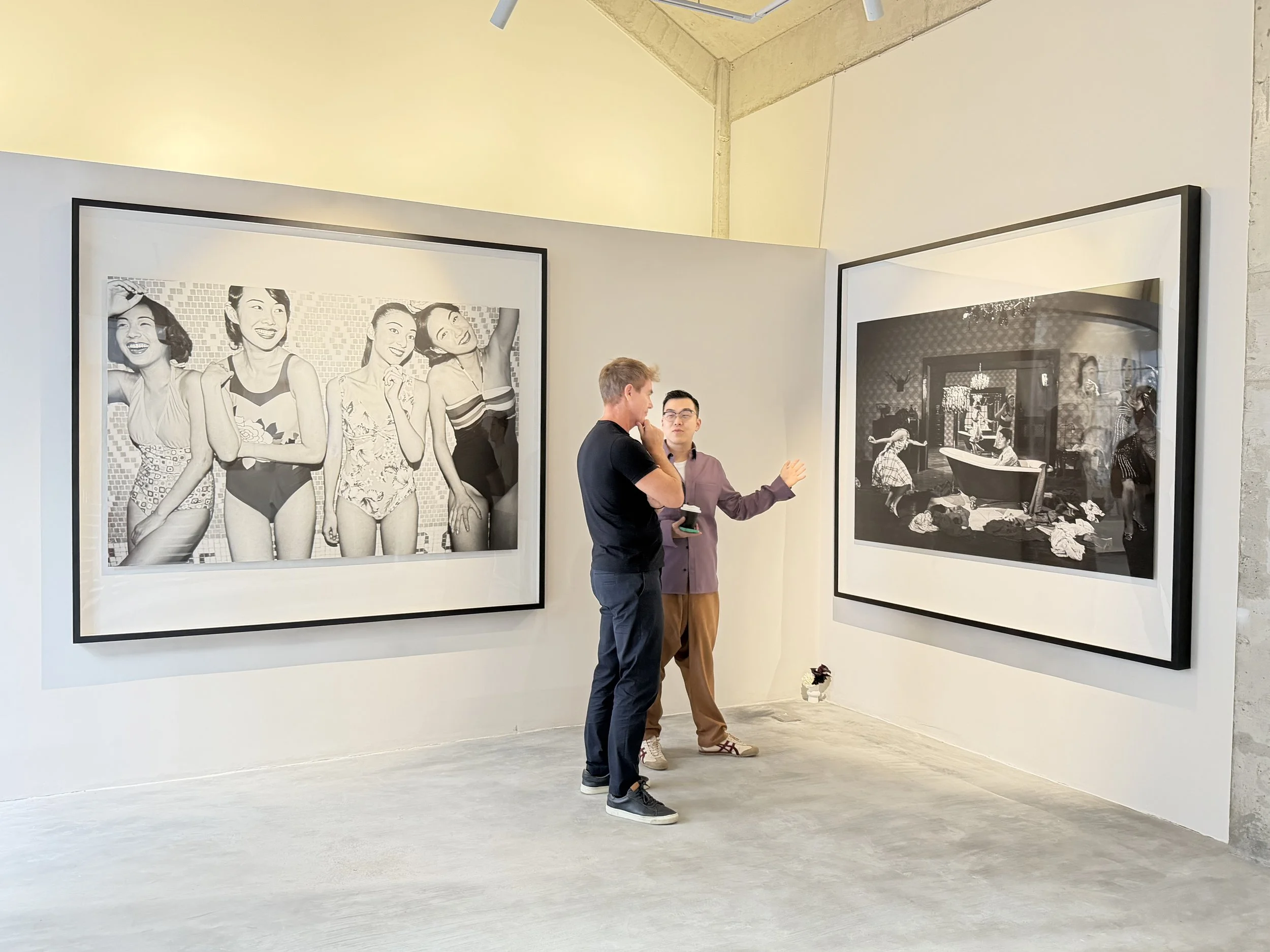
“Modern Chinese art emerged not in isolation, but in dialogue with history and change.”
STEVEN ALDERTON
CHINESE ART
Chinese art spans one of the world’s most enduring and influential cultural legacies, encompassing over two millennia of creative practice. From ancient dynastic traditions to the cutting-edge experiments of the present day, it offers a profound visual narrative shaped by history, philosophy, politics, and social change. Chinese artists have drawn from traditional techniques while forging contemporary pathways, exploring themes such as identity, cultural memory, transformation, and the tensions between heritage and globalisation. Today, Chinese art plays a vital role in both national and international cultural landscapes, contributing to major exhibitions, biennales, and critical conversations about the future of contemporary art.
The emergence of Chinese contemporary art on the global stage was significantly shaped by the artistic movements of the 1980s and 1990s, particularly the New Wave and Cynical Realism. This period was pivotal, reflecting a cultural shift that paralleled the revolutionary moments of Western Impressionism and Modernism. Artists working during this time laid the foundations for today’s leading practices, responding to the complexities of a rapidly changing society through both critique and innovation.
Among the most significant figures from this era is Yue Minjun, known for his iconic laughing self-portraits that blend humour and political satire, capturing a uniquely critical view of post-socialist China.
Zhang Xiaogang created his renowned “Bloodline” series, drawing from family portraits and Socialist Realist aesthetics to explore memory, identity, and generational trauma.
Fang Lijun produced surreal, unsettling depictions of bald figures that became visual metaphors for anxiety, individualism, and alienation in a time of cultural upheaval.
Wang Guangyi examined the rise of consumerism and ideological shift in China through works such as his “Great Criticism” series, which juxtaposes propaganda imagery with Western commercial logos.
Zeng Fanzhi, through emotionally charged portraits and abstracted forms, explored the psychological dimensions of urbanisation and social transformation, particularly in his acclaimed “Mask” series.
In the broader historical arc of modern Chinese art, several artists have emerged as central figures whose work bridges tradition and experimentation.
Zao Wou-Ki developed lyrical abstractions that synthesised Chinese calligraphic gestures with Western modernist painting, establishing a new language of cross-cultural abstraction.
Qi Baishi, a modern master of ink painting, captured poetic scenes of nature and everyday life with fluid brushwork and a profound sense of vitality.
Zhang Daqian, known for his versatility, combined classical Chinese painting techniques with bold explorations of colour and form, creating both faithful homages and daring reinventions of traditional styles.
Cui Ruzhuo is recognised for his monumental ink landscapes that continue the literati tradition, embodying a sense of continuity with classical ideals while embracing the scale and ambition of contemporary art.
Chen Yifei brought cinematic realism and emotional resonance to his depictions of traditional life and cultural nostalgia.
Fang Lijun and Yue Minjun, emerging from the Cynical Realism movement, continued to shape Chinese contemporary art through works that reflect societal tension, satire, and existential introspection.
Liu Xiaodong focuses on real people and lived experience, often painting on location to create large-scale portraits that reflect China’s shifting social and environmental realities.
Wu Guanzhong played a pivotal role in connecting Eastern and Western art forms, moving fluidly between abstraction and figuration, and combining modernist formalism with Chinese aesthetics.
Sanyu, often called the “Chinese Matisse,” created sensual, minimalist works that merged Chinese brush traditions with Western compositional structures, contributing significantly to the development of modern Chinese painting.
The diversity and impact of Chinese contemporary artists is also reflected in research such as the Hurun China Art List, which identifies some of the most consistent and influential figures shaping the art landscape.
Liu Ye, leading the list, is celebrated for his minimalistic and whimsical style, with works often featuring solitary figures and architectural elements rendered with calm precision and emotional resonance.
Cui Ruzhuo, a prominent presence in the art world, is known for his large-scale ink works that evoke the grandeur of Chinese landscape painting, blending tradition and innovation.
Huang Yuxing, a rising star, creates vibrant, psychedelic landscapes filled with futuristic symbolism and saturated colour, offering a younger voice in Chinese art that connects with global contemporary movements.
Zhou Chunya continues to receive critical attention for his expressive use of colour and his exploration of symbolic themes such as masculinity, identity, and cultural transition.
Zeng Fanzhi remains a defining figure, known for his mastery of emotional and psychological portraiture as well as his painterly experimentation.
Newer voices such as Jia Aili offer introspective, post-apocalyptic visions that combine technical virtuosity with metaphysical inquiry, addressing themes of modernity, loss, and the unknown.
Liu Xiaodong, long recognised for his deeply observational practice, maintains a strong presence with works that blend documentary and painterly approaches.
Artists who have maintained visibility for more than a decade, include; Cui Ruzhuo, Zhou Chunya, Zeng Fanzhi, Liu Ye, Fan Zeng, Huang Jiannan, Zhang Xiaogang, Liu Wei, He Jiaying, Liu Xiaodong, Shang Yang, Luo Zhongli, Jin Shangyi, Fang Lijun, Liu Guosong, Shi Guoliang, Wang Mingming, Ai Xuan, Ren Zhong, Wang Guangyi, Lin Yong, Jia Youfu, Wang Yidong, and Tian Liming. These artists represent a broad spectrum of practice—from literati painting and figuration to conceptual abstraction and socio-political commentary.
The legacy and continued innovation within Chinese art speak to the richness of its visual language and the multiplicity of its voices. Artists across generations contribute to a national and international discourse that bridges dynastic heritage, revolutionary experience, and contemporary realities. Their work reflects a deep awareness of cultural lineage while offering new perspectives on what it means to create in a rapidly changing world. Through painting, sculpture, ink, installation, photography, and performance, Chinese artists continue to shape how we understand history, identity, power, and beauty in the 21st century.