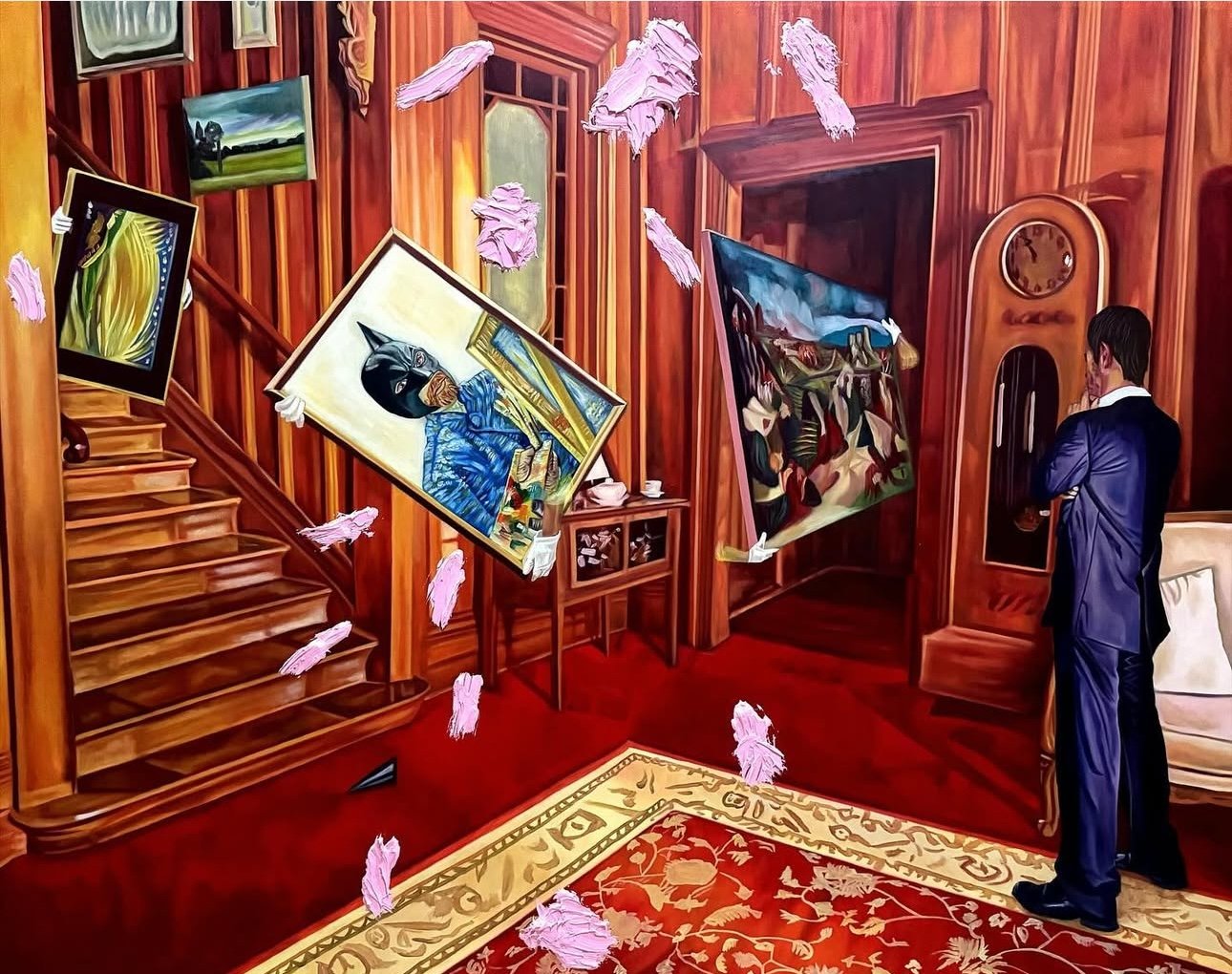
“Southeast Asian art does not speak with one voice, its strength lies in its multiplicity.”
STEVEN ALDERTON
SOUTHEAST ASIAN ART
Southeast Asia has emerged as a vital and dynamic region in contemporary art, rich in cultural diversity, artistic experimentation, and interwoven histories. Spanning countries such as Indonesia, the Philippines, Singapore, Vietnam, Thailand, and Malaysia, the region’s artists engage with a wide range of themes, including folklore, spirituality, identity, memory, post-colonial narratives, and environmental concerns. Drawing on deep-rooted cultural traditions and lived experiences, their work reflects the complexities of their societies while connecting with global contemporary dialogues. Supported by a growing infrastructure of institutions, residencies, and exhibitions, Southeast Asia has become a significant voice in the international art landscape.
Artists such as Rodel Tapaya are celebrated for richly detailed paintings that merge traditional Filipino folklore with sharp contemporary commentary, creating expansive visual narratives grounded in cultural storytelling.
Wedhar Riyadi explores the intersection of pop culture and heritage, fusing traditional Indonesian motifs with contemporary imagery to comment on identity in a globalised world.
Tiffany Lafuente brings material experimentation and personal storytelling together in works rooted in contemporary Filipino culture, contributing to evolving expressions of Southeast Asian narrative art.
Thalita Hamaoui is recognised for her introspective, textured works that explore memory, identity and the emotional weight of human experience.
Rirkrit Tiravanija, based in Thailand, is known for socially engaged, participatory installations that blur the boundaries between art and everyday life, while Nguyen Phuong Linh from Vietnam examines displacement, memory, and transformation through poetic sculptural forms and installations.
Martha Atienza, working in the Philippines, creates multimedia works that explore ecological fragility and social realities, while Christine Ay Tjoe from Indonesia employs abstraction to delve into psychological tension, spirituality, and the intricacies of human emotion.
Ayka Go produces intricate mixed-media pieces that reflect on impermanence, fragility and the layered processes of memory and repair, often working with a tactile and conceptual intensity.
Thania Petersen uses performance, photography, and installation to investigate post-colonial legacies, cultural identity, and historical erasure, creating deeply resonant, multi-dimensional work.
Heri Dono infuses his paintings and installations with political critique and humour, drawing from Javanese mythology and contemporary realities to create works that are both whimsical and sharply insightful.
Christine Ay Tjoe’s emotionally charged abstractions are rooted in the complexities of spiritual struggle, internal conflict and personal transformation, expressing human vulnerability with striking visual form.
Eko Nugroho blends street art, traditional batik, embroidery and graphic language to address social issues, resulting in vibrant, layered works that reflect the fast-paced shifts in Indonesian urban life.
Maria Taniguchi is known for her meticulous brick wall paintings and conceptual installations, exploring repetition, labour and systems of meaning through minimalist forms.
Ronald Ventura creates layered, hyper-detailed paintings and sculptures that reflect the collision of traditional Filipino symbolism with pop culture, fantasy, and global contemporary life.
These artists, along with many of their peers, represent the growing influence and diversity of Southeast Asian contemporary art. Their practices span a wide range of media and conceptual concerns, from intimate personal narratives to expansive socio-political critique. What unites their work is a shared urgency to reflect their environments, histories and identities in ways that are both deeply rooted and outward-looking.
The region’s cultural ecosystem is supported by a rapidly expanding network of museums, institutions, and arts infrastructure. Singapore has become a major cultural hub, with the National Gallery Singapore offering platforms for regional and international dialogue. In Indonesia, Museum MACAN plays a leading role in presenting Southeast Asian and global contemporary art. The BenCab Museum in the Philippines actively promotes both Indigenous and contemporary artistic practices. Across Malaysia, Thailand, Vietnam, and Cambodia, a new generation of curators, institutions and cultural workers are building frameworks that support sustained artistic development. As artists from Southeast Asia continue to exhibit in international biennales, triennales and global exhibitions, their voices and visions contribute powerfully to the evolving story of contemporary art worldwide.